
New Jersey Marriage License Records
A marriage license in New Jersey is filed through the Local Registrar in the town where one party lives. The state has 565 municipalities, and each one has its own registrar who handles these filings. New Jersey requires both people to appear in person, bring valid ID, and pay a $28 fee. After a 72-hour wait, the license is issued. It stays valid for 30 days. This guide covers how to apply for a New Jersey marriage license, what documents you need, where to search for past records, and how to get certified copies from the state or county level.
New Jersey Marriage License Quick Facts
How to Apply for a New Jersey Marriage License
Both parties must go to the Local Registrar in the town where one of them lives. You cannot apply by mail or online in New Jersey. Walk into the registrar office together and bring the right documents. Staff will guide you through the forms. The whole visit takes about 30 minutes in most cases. Once you file, there is a 72-hour waiting period before the marriage license is issued. This wait applies to first-time applicants and does not apply if either party was previously married.
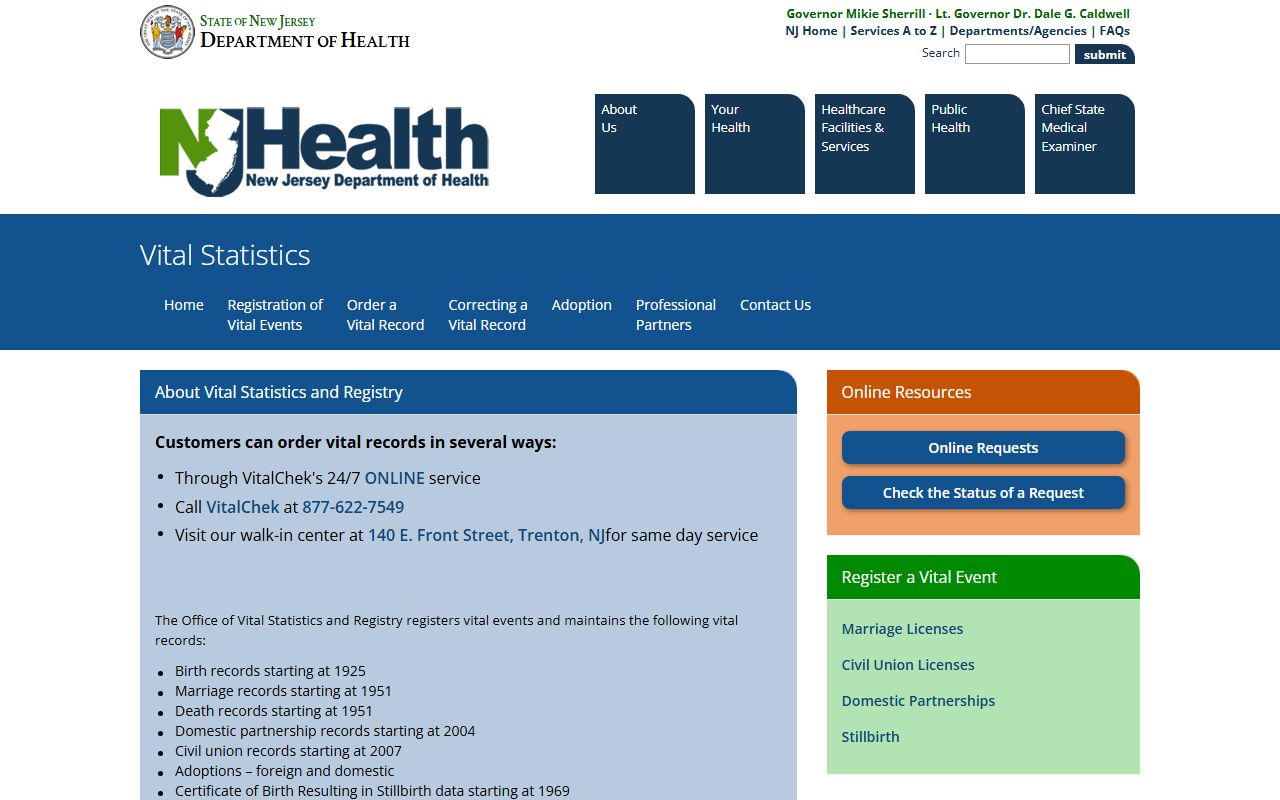
The New Jersey Department of Health sets the rules for all marriage license applications in the state.
After the 72-hour wait ends, you pick up the marriage license from the same registrar office. The license is then valid for 30 days under New Jersey Statute 37:1-4. If you do not use it in that time, it expires. You would need to start over. The initial application stays on file for six months and can be extended to one year with the registrar's approval in New Jersey.
New Jersey Marriage License Documents
You need several forms of ID to get a marriage license in New Jersey. Each person must bring proof of who they are and where they live. The registrar will check these at the time of your visit. Missing even one item can delay your filing.
Bring a valid driver's license, passport, or state-issued ID card. You also need proof that you live in New Jersey, such as a utility bill or bank statement. Both parties must provide their Social Security numbers. One witness who is at least 18 years old must be present at the time of the application. If either person was married before, bring proof that the prior marriage ended. A death certificate or final divorce judgment will work for this purpose in New Jersey.
The US Marriage Laws guide for New Jersey has a full breakdown of what each registrar expects.
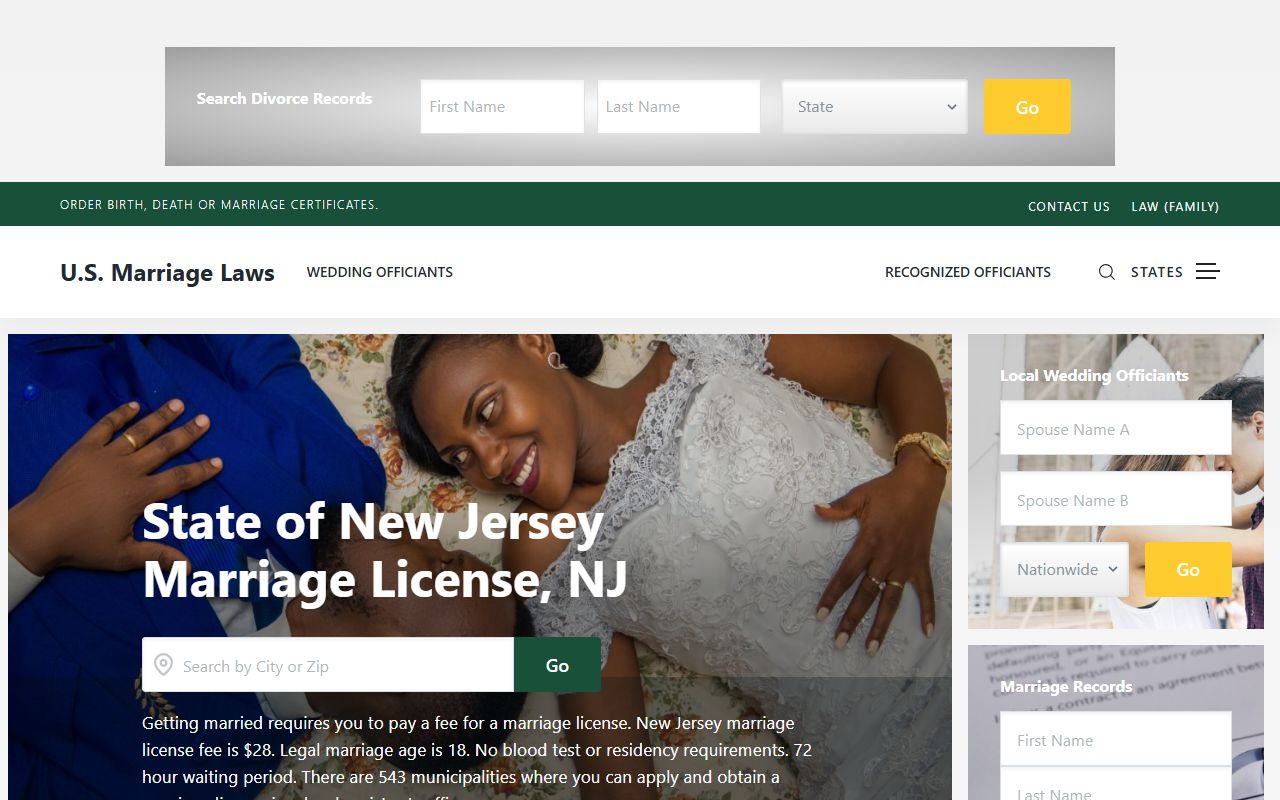
Blood tests are not needed in New Jersey. The state dropped that rule years ago. This makes the process faster for most couples.
Note: Non-residents of New Jersey can apply, but the marriage license is only valid in the town where it was issued.
Marriage License Age Rules in New Jersey
New Jersey set a firm minimum age for marriage. Both parties must be at least 18. There are no exceptions to this rule. A 2018 law banned child marriage in the state with no parental consent or judicial waiver allowed. This made New Jersey one of the first states to set an absolute floor at 18 under Statute 37:1-6.
First and second cousin marriages are allowed in New Jersey. The state does not bar these unions. However, marriages between direct ancestors and descendants or between siblings are prohibited under Statute 37:1-1. These limits match the rules in many other states across the country.
New Jersey Same-Sex Marriage License
Same-sex marriage has been legal in New Jersey since October 18, 2013. Statute 37:1-1.1 affirms the state's findings on marriage equality. Same-sex couples apply for a marriage license the same way as any other couple. The fee, wait time, and documents are all the same. No registrar in New Jersey can deny an application based on the gender of either party.
Couples who entered civil unions before 2013 can also convert those to marriages. The process is simple. Go to the Local Registrar with your civil union certificate and request a marriage license in New Jersey.
New Jersey Wedding Ceremony Rules
After you get the marriage license, the ceremony must happen within 30 days. Two witnesses must be present. They must be at least 18 years old. The officiant signs the license along with both witnesses. Then the signed license goes back to the Local Registrar within five days for filing in New Jersey.
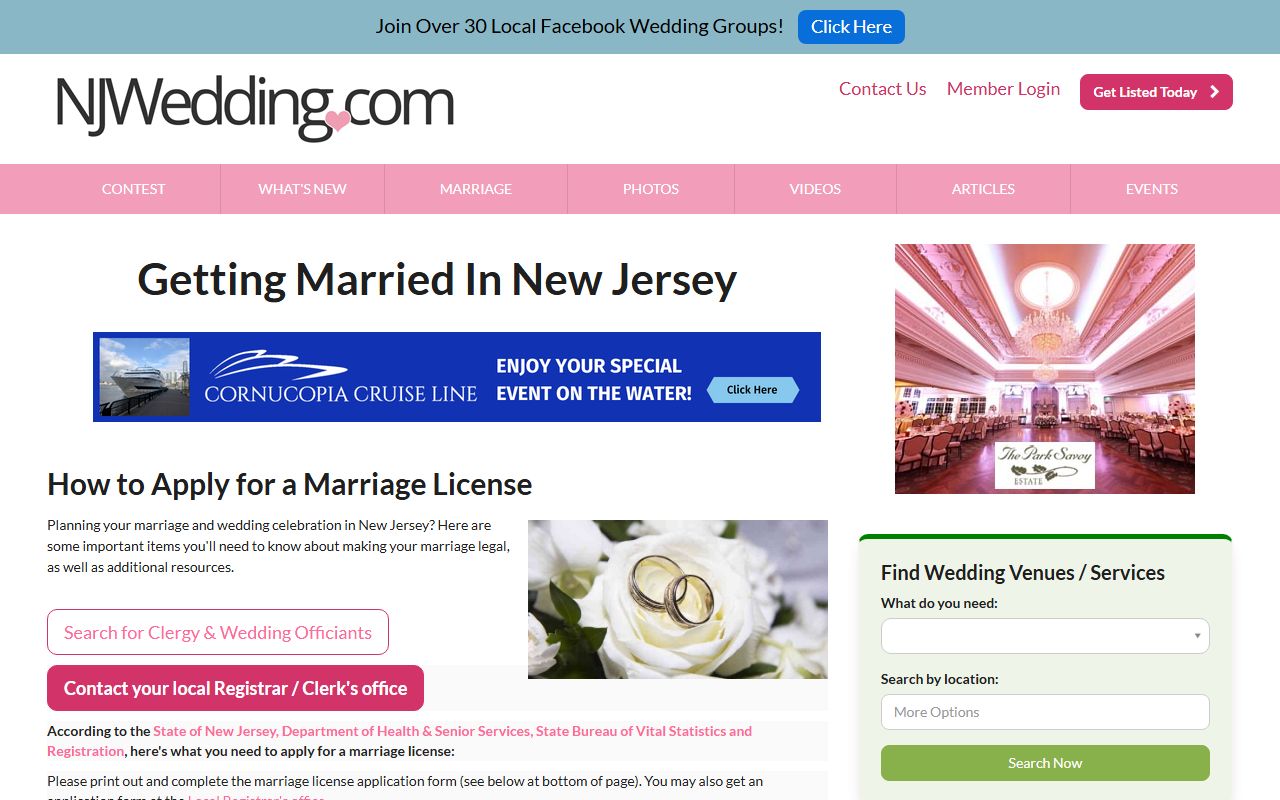
Many types of people can serve as the officiant at a New Jersey wedding. Judges, surrogates, county clerks, and mayors all have the legal power to perform marriages. Religious leaders such as ministers, rabbis, and priests can also officiate. The NJWedding.com guide has tips on planning your ceremony.
Common law marriages are not recognized in New Jersey. You must have a valid marriage license and a ceremony for a legal union. Living together, regardless of how long, does not create a legal marriage in this state.
Note: The officiant must be authorized in New Jersey or the marriage may not be legally valid.
New Jersey Marriage License Registrar Offices
New Jersey has 565 municipalities. Each one has a Local Registrar who handles marriage license applications. You file at the registrar in the town where you or your partner lives. If both of you live in New Jersey but in different towns, you can pick either one.
The New Jersey state list of local registrars shows every office by county. This is the official directory from the Department of Health.
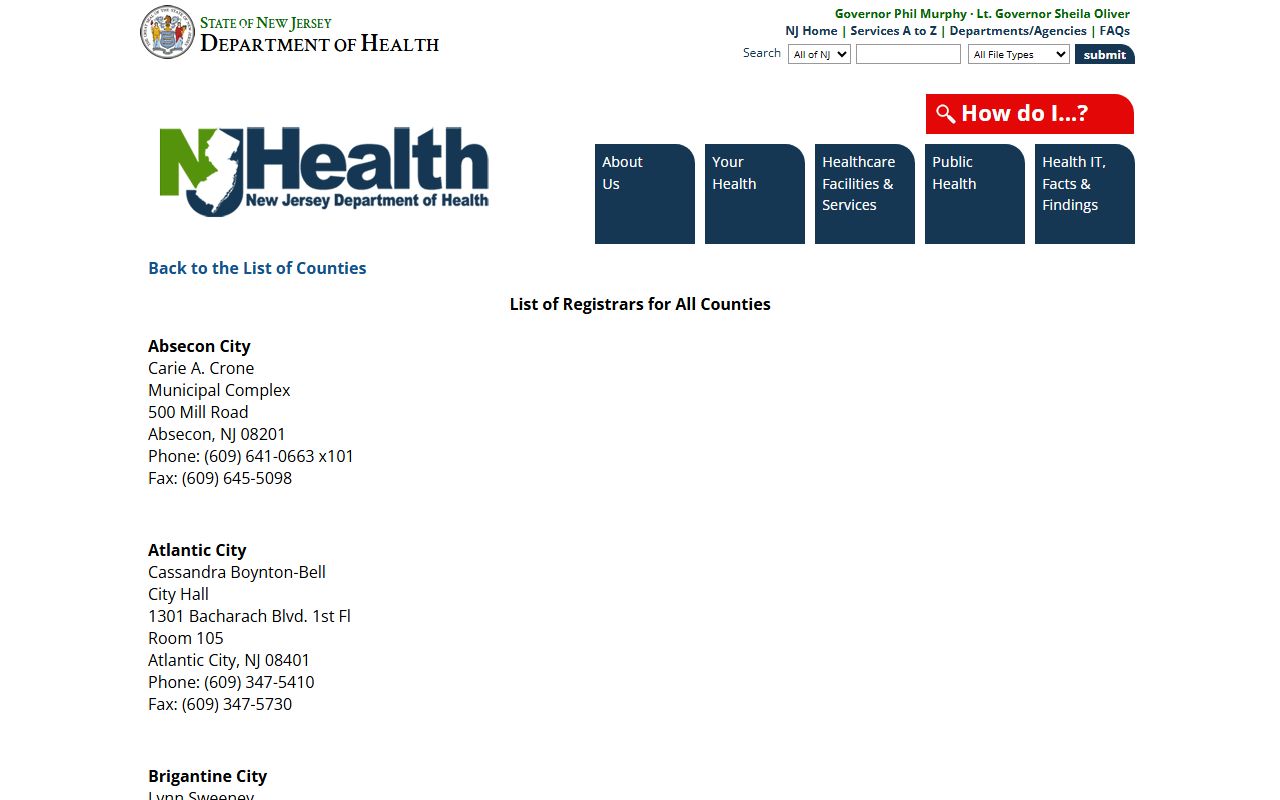
Hours vary by town. Some small offices are open only a few days each week. Call ahead to confirm hours. Larger cities like Newark, Jersey City, and Trenton keep regular weekday hours. Some also offer Saturday appointments for marriage license filings in New Jersey. Walk-ins are accepted at most offices, but an appointment can save time.
If neither party lives in New Jersey, you can still apply. Go to the registrar in the town where the wedding will take place. The marriage license will only be valid in that specific town. New Jersey residents get a license valid across the whole state.
Getting Copies of New Jersey Marriage Records
The New Jersey Office of Vital Statistics holds marriage records from 1951 to the present. This office is at 140 E. Front Street in Trenton. You can request certified copies by mail or in person. Phone orders go through VitalChek at 877-622-7549. Only eligible applicants can get certified copies because vital records are not public records in New Jersey.
Certified copies come on safety paper with a raised seal. These are legal documents you can use for name changes, immigration, or benefits claims. Certifications, which are meant for genealogy use, come on plain paper without the raised seal. Both types are available from the state in New Jersey.
For international use, you may need an apostille seal on your marriage record. The New Jersey Department of Treasury handles apostille requests. This seal confirms the document is authentic for use in other countries that are part of the Hague Convention.
Historical Marriage License Records in New Jersey
The New Jersey State Archives holds older marriage records. This is a key resource for genealogy research. The archives are at 225 W. State Street, Trenton, NJ 08625.
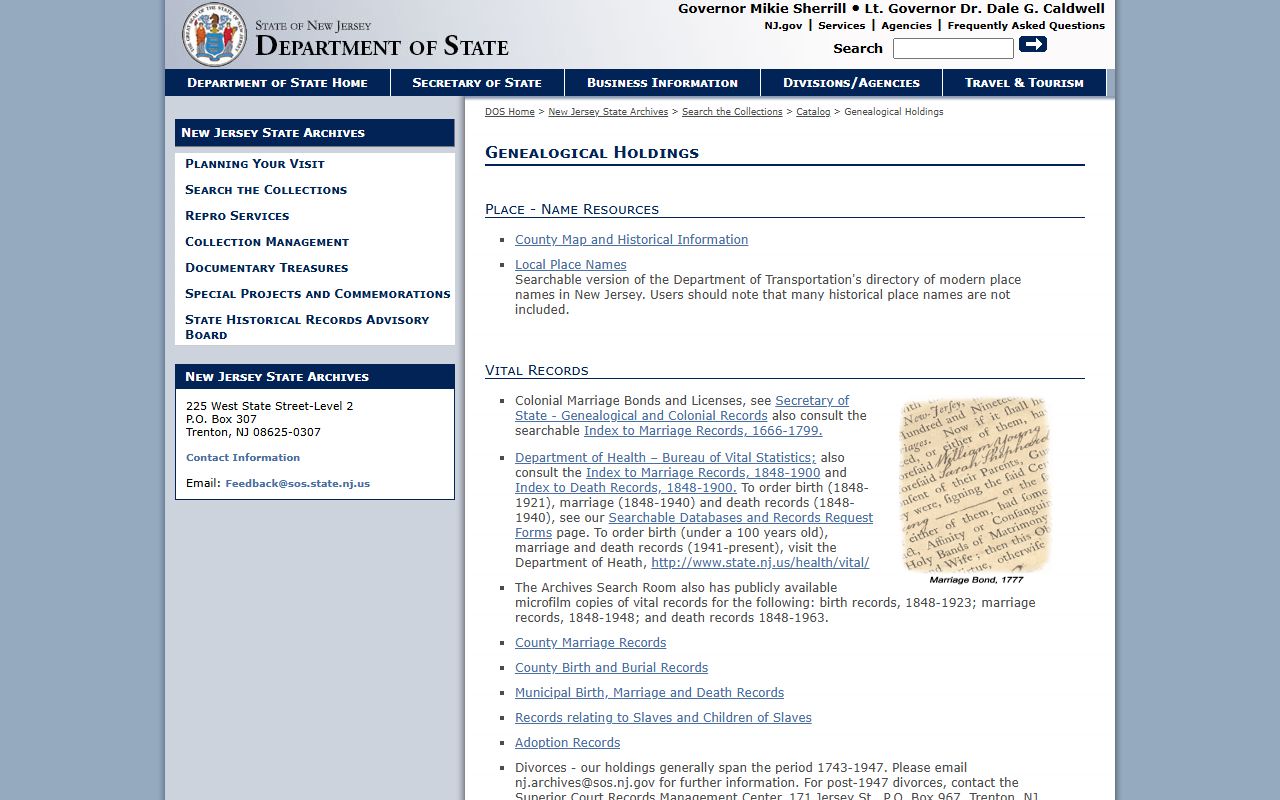
State-level marriage records at the archives span from 1848 to 1948. These are the records that predate the modern vital statistics system. For even older records, the archives hold colonial marriage bonds from 1711 to 1795. These bonds are among the oldest marriage-related documents in New Jersey. They were not licenses in the modern sense but served a similar legal role in colonial times.
The New Jersey State Archives county marriage records collection organizes these historical documents by county.
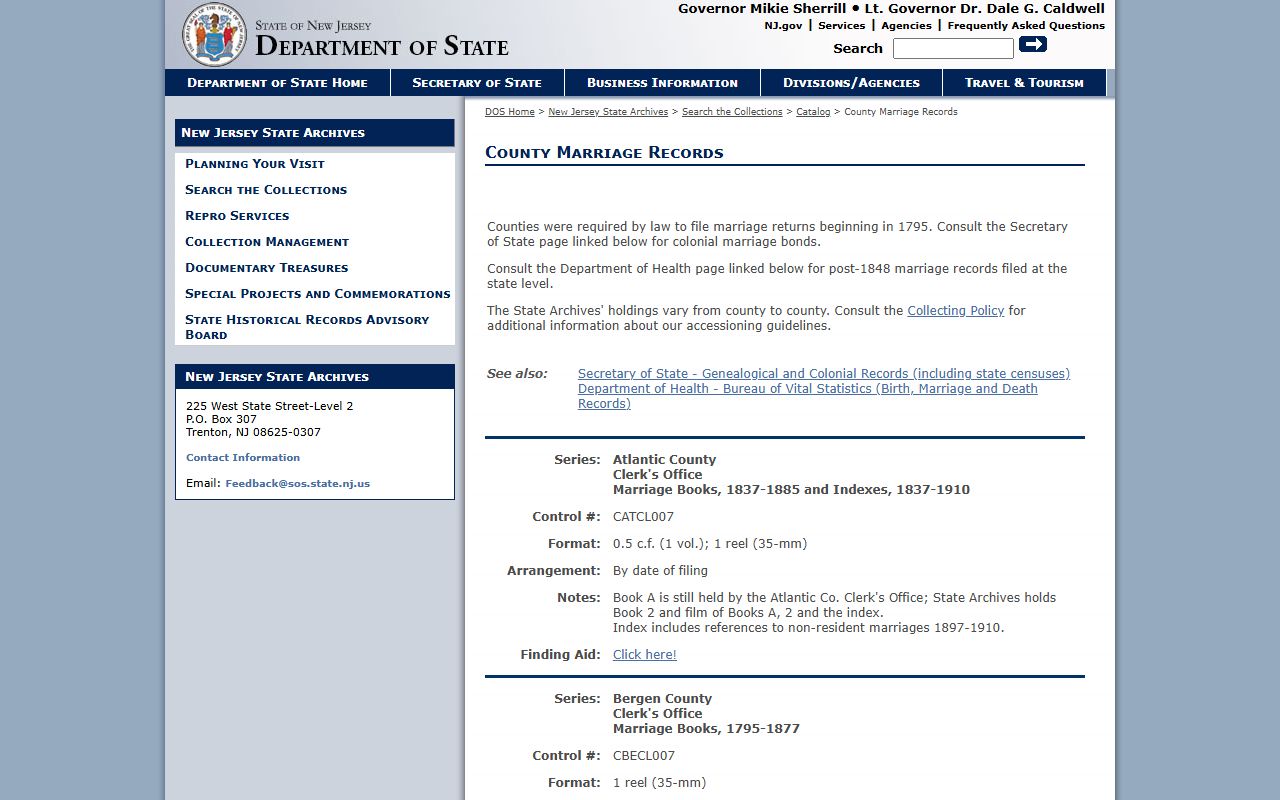
Researchers can visit the archives in person during business hours. Some indexes are available online. Staff can help you find records by name, date, or county. There is no fee to view records on site, but copies have a small charge in New Jersey.
Note: Records from 1949 to 1950 may be harder to find because the state system was in transition during those years.
New Jersey Marriage License Statutes
New Jersey law governs every part of the marriage license process. The state statutes under Title 37 lay out the full set of rules. These laws cover who can marry, how to get a license, and what makes a marriage valid in New Jersey.
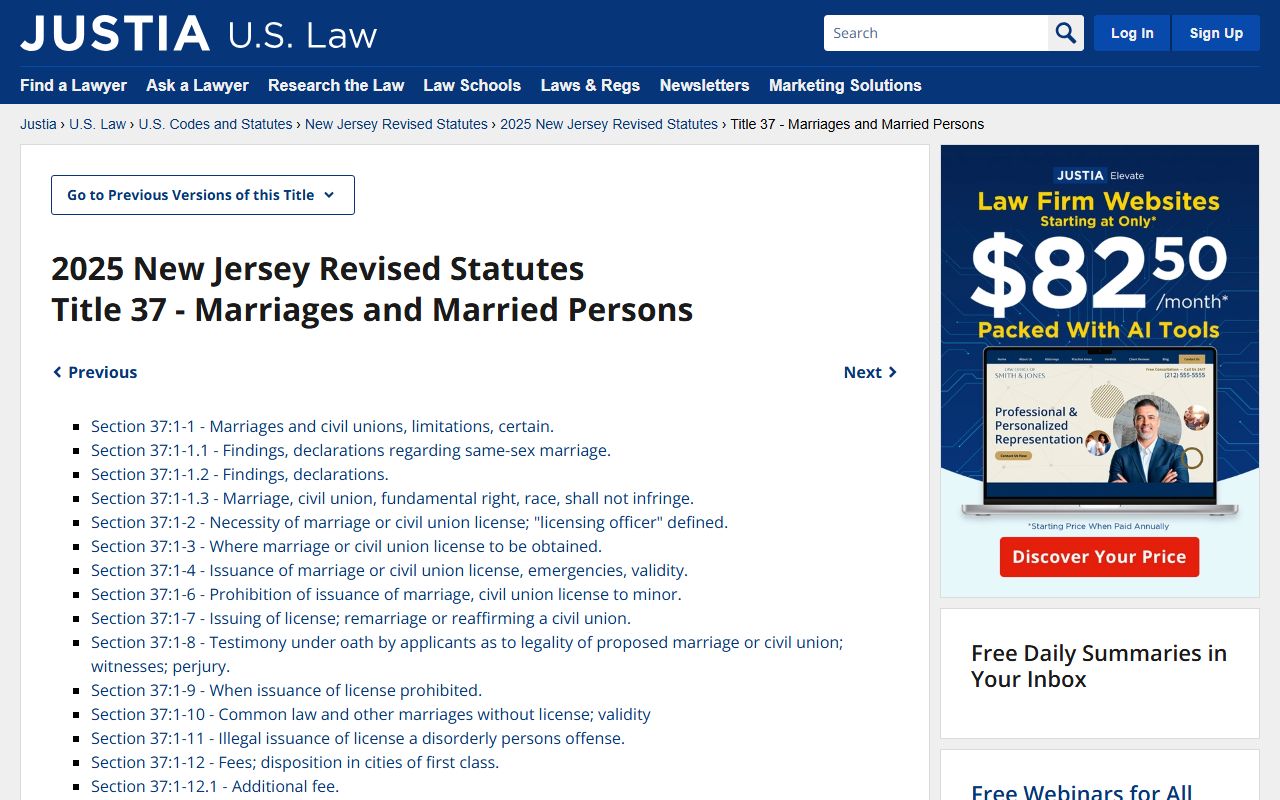
Statute 37:1-2 says you must have a marriage license before any ceremony. No license means no valid marriage. Statute 37:1-4 says the license is good for 30 days once it is issued. Statute 37:1-6 sets the minimum age at 18. No judge or parent can waive this rule in New Jersey. Statute 37:1-1 lists the people who cannot marry each other, such as direct relatives. These are firm rules with no exceptions allowed.
Statute 37:1-1.1 was added in 2013. It sets out the state's findings on same-sex marriage. This law made New Jersey one of the early states to codify marriage equality into its own statutes rather than rely only on court rulings.
Remarriage and Marriage License in New Jersey
If you were married before, New Jersey has a few extra steps. Bring proof that your prior marriage ended. A final divorce judgment or death certificate is what the registrar needs. Without this proof, the application will not be processed in New Jersey.
One benefit for those remarrying is that the 72-hour wait does not apply. You can pick up your new marriage license right after filing. The $28 fee stays the same. All other rules, from ID to witnesses, are the same for a remarriage application in New Jersey.
Browse New Jersey Marriage License Records by County
Each county in New Jersey has local registrar offices that handle marriage license applications. Pick a county below to find details for that area.
Marriage License Records in Major New Jersey Cities
Residents apply for a marriage license at the Local Registrar in their city or township. Pick a city below for local details.